
Fauxliage: Disguised Cell Towers of the American West
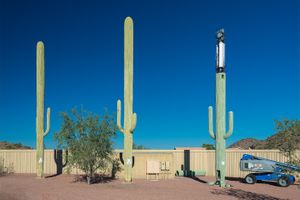
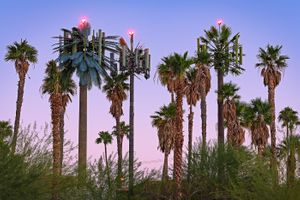
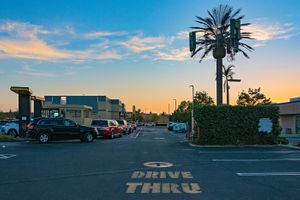
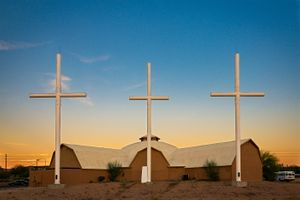
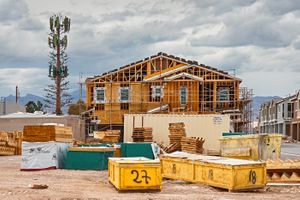
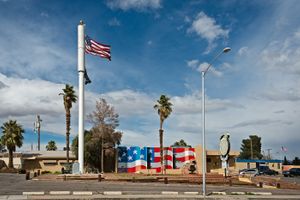
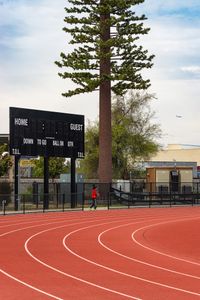
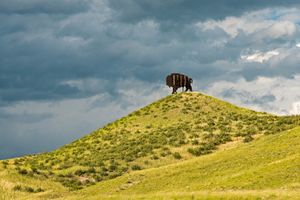
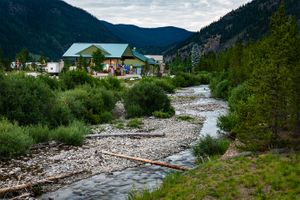
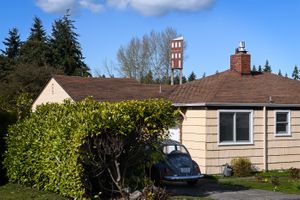
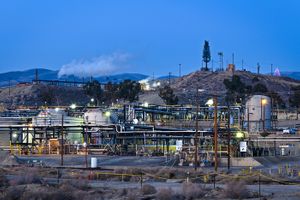
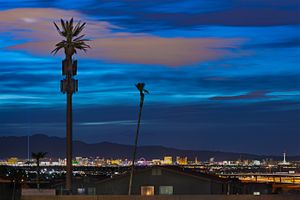
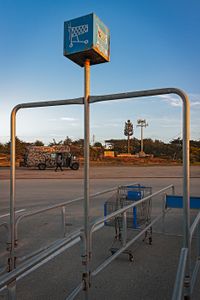
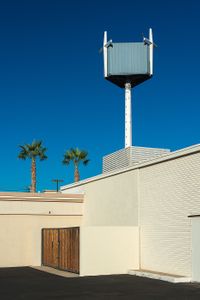
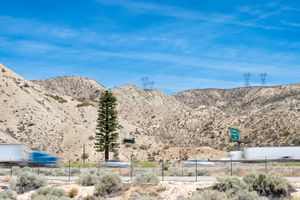
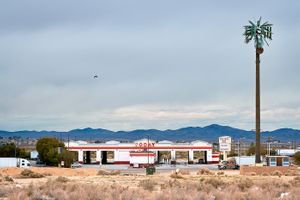
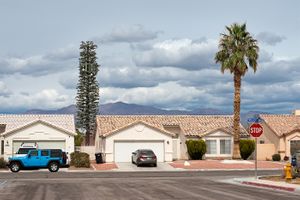
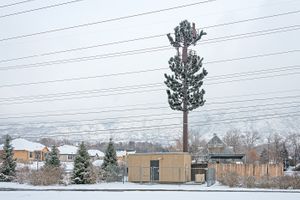
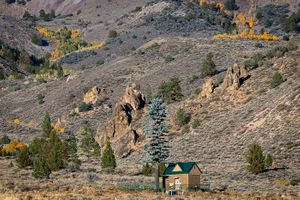
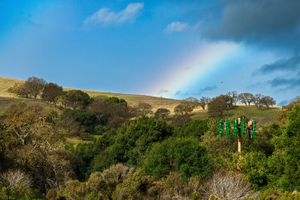
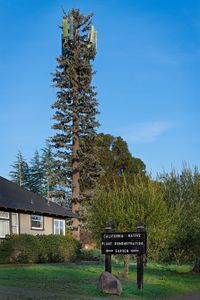
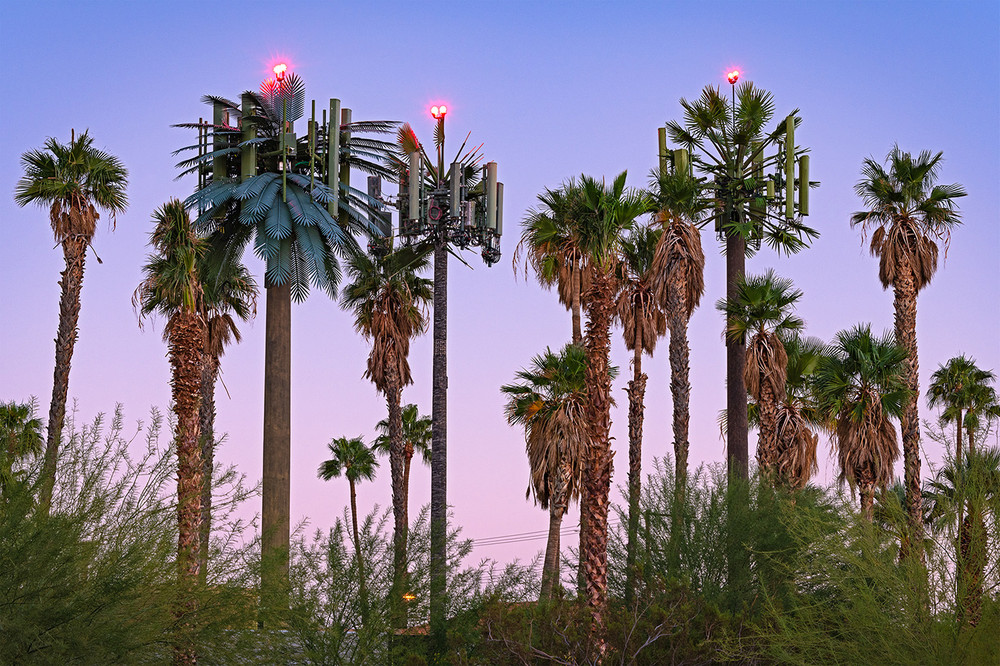
Fauxliage documents the proliferation of disguised cell phone towers in the American West. By attempting to conceal an unsightly yet essential technology of the modern world, our landscapes are now sown with a quirky mosaic of masquerading palms, evergreens, flagpoles, crosses, and cacti. But the towers are simulacra. They are water towers that hold no water, windmills that provide no power, and trees that provide no oxygen; yet they all provide five bars of service. The often-whimsical camouflage belies the cellular equipment's covert ability to collect all the personal data transmitted from our cell phones. Big tech and the government are always listening, storing, buying and selling our harvested information. Surveillance capitalism is big business in the internet age. The faux trees pose an environmental concern. As the trees age, the plastic needles and fronds breakdown and litter the ground beneath the trees. What started as an attempt to reduce visual pollution is now creating plastic pollution. I traveled to ten western states to photograph the variety of concealments. The towers pose the question: how much of an ersatz landscape and manufactured nature are we willing to accept in exchange for connectivity? As the fifth generation (5G) of cellular technology continues to roll out, new cell towers will be smaller and more inconspicuous, often discreetly integrated into the tops of streetlight poles. Perhaps elaborately disguised “fauxliage” towers will start disappearing and be considered an anachronism of the early 21st century. The decorated towers could join drive-up photo kiosks, phone booths, newsstands, and drive-in movie theaters as architectural relics of the past. Coincidentally, those functionalities are all standard capabilities of our cell phones, now held in the palms of our hands. A monograph of my Fauxliage images, published by Daylight Books, is now available.
No categories selected
Photos (24)