Camille Lemoine (b.1999) is a Scottish lens-based artist, based in Glasgow. Her work is centred around creating a visual language to communicate the intangible non-physical character of a place, through slow observation of the land. Her current focus is on rural parts of Scotland, and our evolving relationships to wilder places.
Her latest body of work 'Down Tower Road' was made in response to not seeing her own experience of living in rural Scotland reflected in photography, which typically relies on literal depictions of the landscape, such as farming, landmarks or dramatic vistas versus an insight into how it feels to exist there. Instead, Camille looks to create imagery that communicates the subtle language of the land and how she has become part of it.
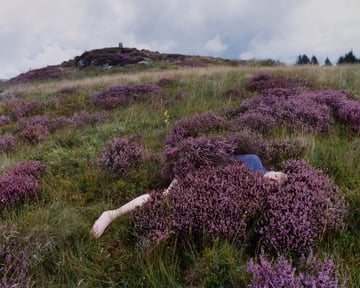
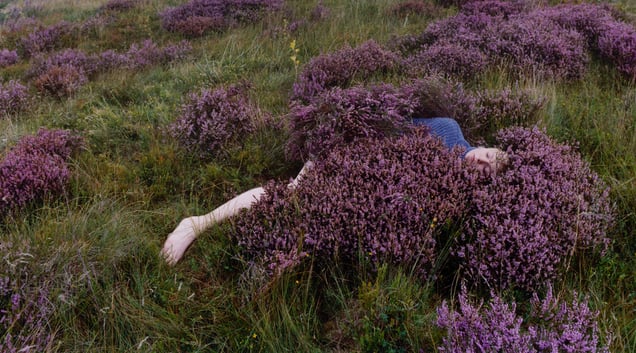
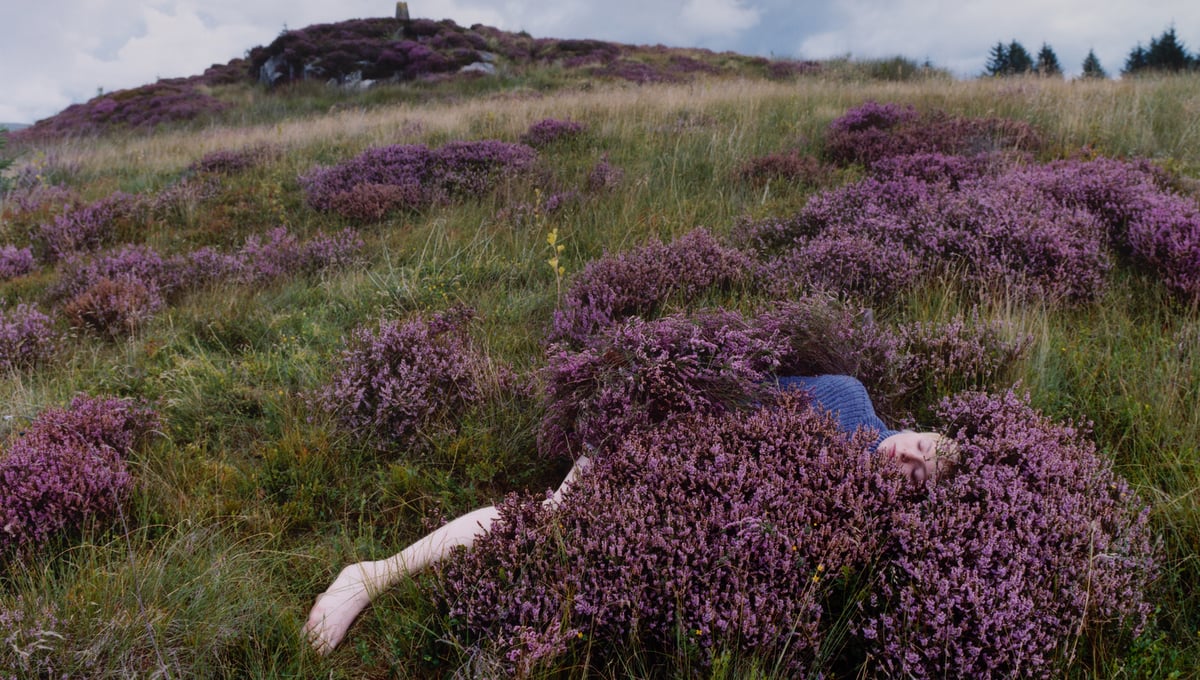
The work is centred around Camille’s hometown, Baldernock, which is a small parish located just outside of Glasgow and feels reserved and shy in nature, mostly made up of moorland and grazing fields. Through practicing the act of noticing, these images are devoted to the intricacies of the landscape, often bringing attention to the individuality of each thing, such as the blue before heavy rain, the pheasant feather found on the hill and the distinct way that the light unfolds. This highlights that it is our connection to these seemingly insignificant details that overtime informs our sense of belonging. The dialogue she shares with the land is also explored through the meeting of body and landscape in both a physical and non-physical sense. at times embodying the feeling of being moved into a different kind of aliveness.
Unlike Scotland’s mother tongue, Gaelic, the English language doesn’t have the depth of nature vocabulary we require to accurately describe specific aspects of the natural world and our experience of place. Creating this work was a way for the photographer to translate her own language from the land and discover new ways of seeing and relating to her home. She says: ‘I’m considering my work as a way of preserving this more-than-physical connection we share with the land. As we lose land and species, it’s not just a physical loss, but an emotional and cultural one. It will be important to remember not just what these things look like, but how they made us feel.”