
Berlin
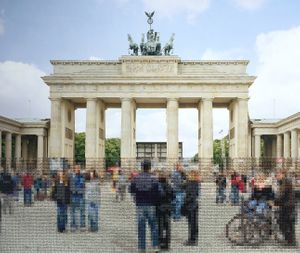
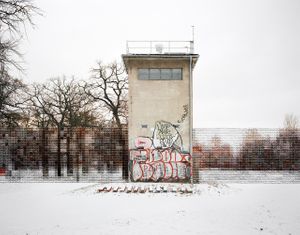
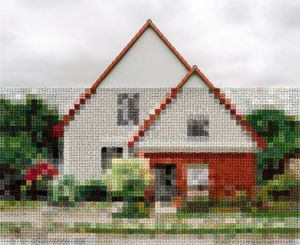
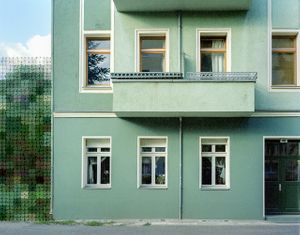
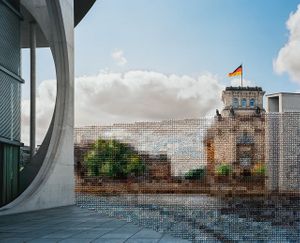
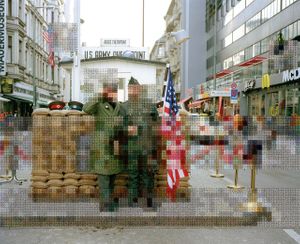
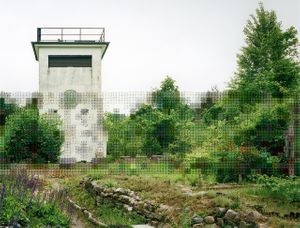
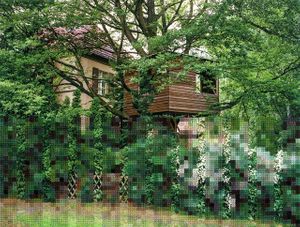
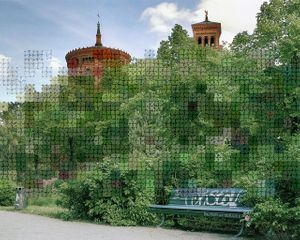
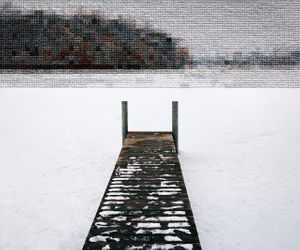
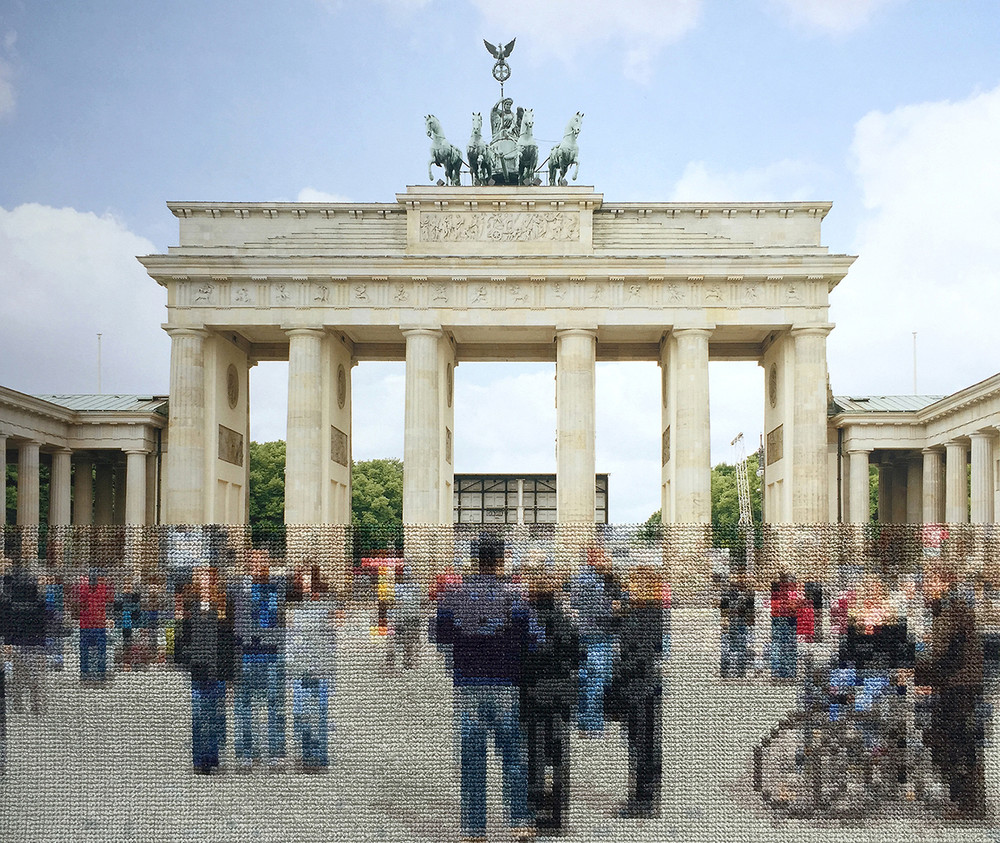
I recently completed my series of 43 photographs of the entire stretch of the former Berlin Wall, a length of roughly 100 miles, obscuring sections of each with cross-stitch embroidery sewn directly into their surfaces. The embroidery resembles pixels, borrowing the visual language of digital imaging in what is otherwise an analog, tactile process. In many images, the embroidered sections represent the exact scale and location of the former wall, offering a pixelated view of what lies behind. They therefore appear as a translucent trace in the landscape of something that no longer exists, but is still a weight on history and memory. By using embroidery in a way that is reminiscent of pixels, I am drawing a connection between forgetting and file corruption. I am interested in the porous nature of memory and the ways in which it can be disrupted and replaced by images, as well as the means by which photography transforms history into nostalgic objects that obscure objective understandings of the past. I made photographs in the city center as well as its outskirts, following the former path of the wall through suburbs and forests. I was particularly interested in photographing locations where no visible traces of the actual wall remain, but where one still finds subtle clues of its existence. These clues include incongruities in architecture, as new structures were built on land parcels where the wall once stood, changes in streetlights, or newer vegetation. Often the embroidered sections of my images run along the horizon line, forming an unnatural separation that blocks the viewer. This aspect of the sewing emphasizes the unnatural boundaries created by the wall itself. But the sewing, which is soft and domestic, provides a literal contrast to the concrete of the wall, and a metaphorical contrast to its divisive symbolism. As the scale of the stitches remains the same throughout, the overall size of each image determines the amount of detail captured in the embroidery, with the larger pieces in the series having over 30,000 individual stitches.
No categories selected
Photos (10)