Digging the Future

Photos (20)

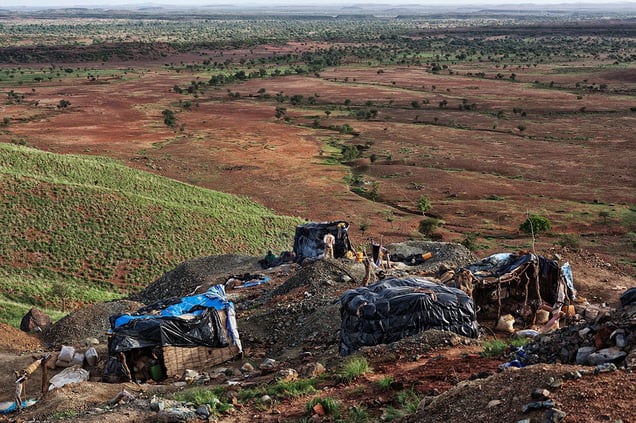
Gold digger’s home. Gold seekers from all over Burkina Faso come to work at sites like Djuga, where they live in straw boxes and without any infrastructure at all. © Matjaz Krivic
File: matjaz_krivic_digging_for_future01.jpg
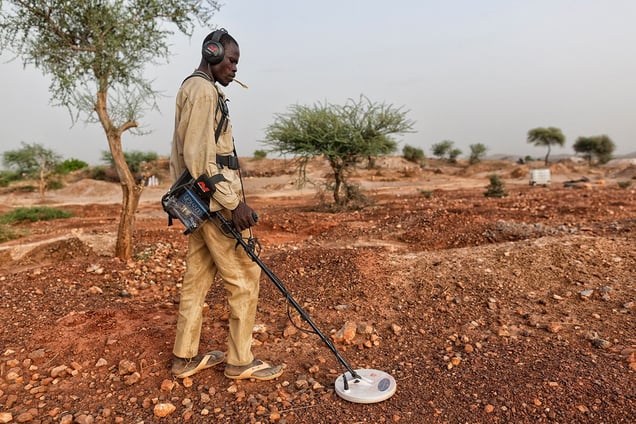
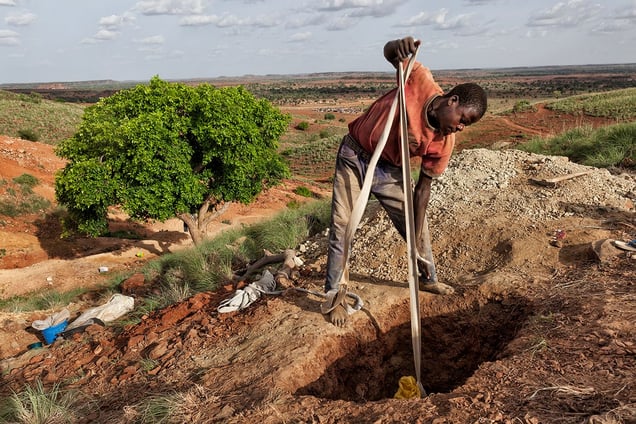
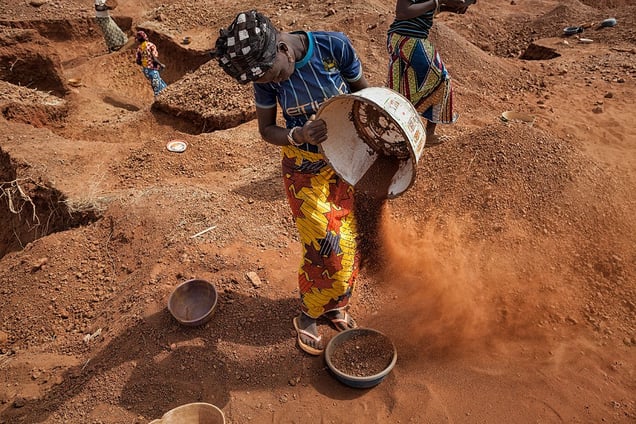
A government civil servant comes to locate a new gold vein near the surface. His detector can locate gold up to a meter deep. He is paid by the miners, but does not come cheap. The women usually dig on the surface, and the men go underground into the pits. © Matjaz Krivic
File: matjaz_krivic_digging_the_future02.jpg
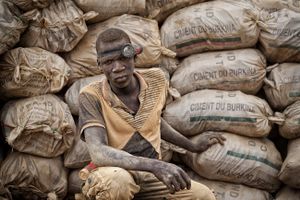
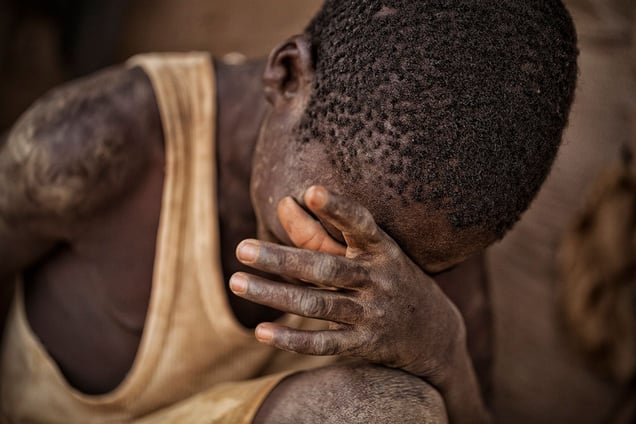
Thousands of youngsters live and work on these sites. They are the children of the mines. Most of them have never been to school. For many of them, the mines are their only home. The International Labor Organisation considers mining one of the worst forms of child labor. This is because of the immediate risks and long-term health problems it poses with exposure to dust, chemicals © Matjaz Krivic
File: matjaz_krivic_digging_the_future03.jpg
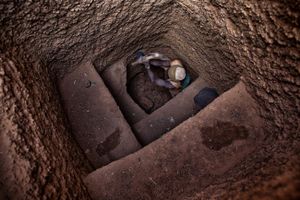
The mines, as deep as 50 meters, are dug by hand by men, women and children.There are always ropes for the buckets of ore but not always for the boys who scrabble up and down the pits finding footholds and hand holds in the dirt walls. Losing grip here could be fatal. © Matjaz Krivic
File: matjaz_krivic_digging_the_future04.jpg
Suleyman (51) and his team have been digging a new pit for the past two weeks. Currently at 6m, they made a tunnel when they struck a vein of gold. These pits become unusable in the rainy season because the ground here is dangerously fragile. © Matjaz Krivic
File: matjaz_krivic_digging_the_future05.jpg
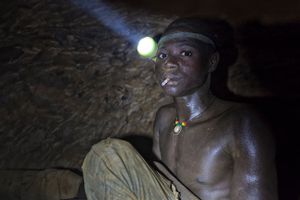
His "office" is a 50m deep, narrow, dangerous and claustrophobic pit. The air is thick, hot and humid, with constant dust that turns his dark arms and face white. He wears a flashlight strapped to his head as he chips ore from the walls into a spece he can barely sit up in. You can barely breathe down here, but for a break, Yakuba lights a cigarette. © Matjaz Krivic
File: matjaz_krivic_digging_the_future06.jpg
"Here the ground is solid, but sometimes the earth is very fragile. Cracks appear in the hole and that’s scary," says Arzuma (24), while he pulls the heavy bag filled with stones out of his 20 meters deep hole. © Matjaz Krivic
File: matjaz_krivic_digging_the_future07.jpg
Nobila (16 ) comes from a Jalgo village, only 26km from the Djuga mines. He has been working here alone for three years. When he gets some money he always takes it home to his family. It is 7 pm, Sitting on the edge of a mine shaft, Nobila readies the fragile plastic lamp strapped to his forehead with an elastic band as he prepares to lower himself into the darkness to do another night shift.
File: matjaz_krivic_digging_the_future08.jpg
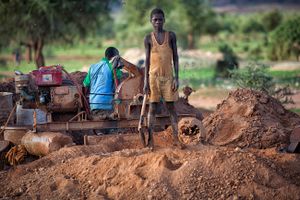
Nuru (13) cannot recall how long he has worked here. He has never been to school and does not know how to read or write. He is upset because his brother, who he works with, is angry at him for not processing enough material through a machine that they have to pay for daily. However, he quickly says that mining is still better than working on the fields back home. © Matjaz Krivic
File: matjaz_krivic_digging_the_future09.jpg
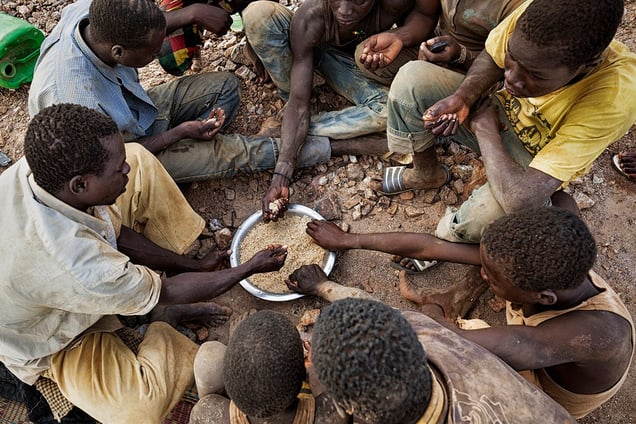
At midday, the miners gather for lunch, usually its a bowl of rice with some oil and a bit of fish, eaten by hand from a communal cooking pot. © Matjaz Krivic
File: matjaz_krivic_digging_the_future10.jpg
After a short break, the digging continues until dark. In an established gold field, such as this one, the holes are dug closer and closer together. Occasionally, the excess digging creates weaknesses, causing the walls to collapse. Last year, four miners died when a line of pits too close to each other collapsed, burying the miners. © Matjaz Krivic
File: matjaz_krivic_digging_the_future11.jpg
Exhausted young girls are waiting in burning heat at the entrance of a mine. It will be their fifth load of stones today. Each girl carries a load of approximately 25 kilos, a stretch of 2 kilometers and 300 meters descent to the temporary working village of Djuga. © Matjaz Krivic
File: matjaz_krivic_digging_the_future12.jpg
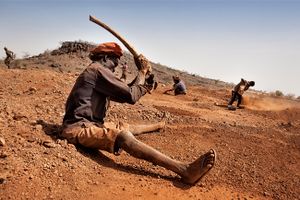
When there is no money to rent a pulverizing machine for crushing stones, the men do it manually, hitting the stones with hard sticks to crush them smaller. © Matjaz Krivic
File: matjaz_krivic_digging_the_future13.jpg
Women dig on the surface where they are repeatedly separating the heavier particles from dust, after which, they will pan it for gold. © Matjaz Krivic
File: matjaz_krivic_digging_the_future14.jpg
Nuru (13) has been tasked to work at the pulverizing machine. He says: "Everything me and my brother earn, we take home to our parents" © Matjaz Krivic
File: matjaz_krivic_digging_the_future15.jpg
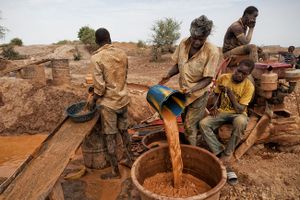
Isa (26) and his team are panning for gold on a site near Gangaol. © Matjaz Krivic
File: matjaz_krivic_digging_the_future16.jpg
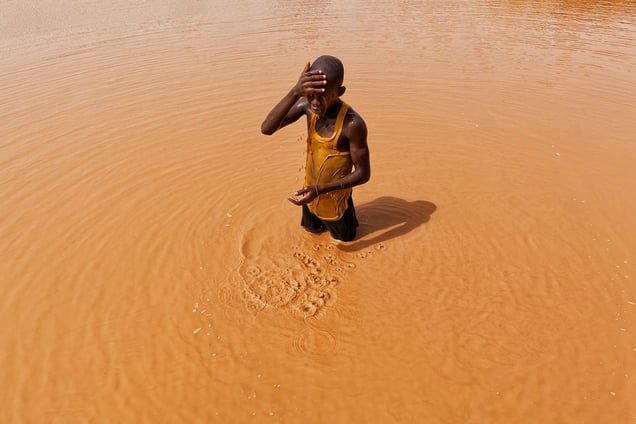
Abdul (14) is one of hundreds of children working at the Djuga mines. In the rainy season there is water to wash off the dust after a long day. In the dry season, the water is gone. © Matjaz Krivic
File: matjaz_krivic_digging_the_future17.jpg
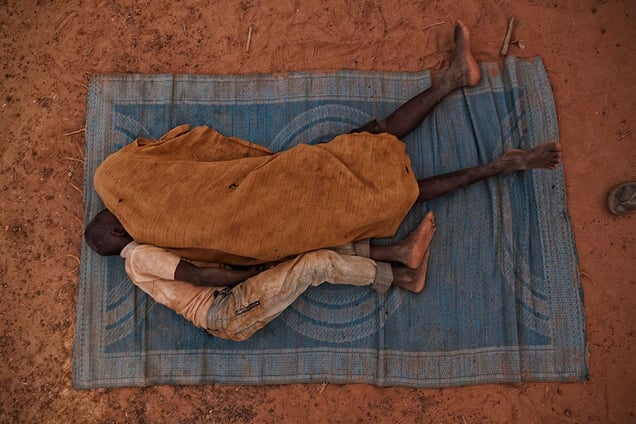
The children, who have been working since sunrise, literally crash and lie down to sleep in the dirt beside the hole where they work. Nuru (13), and Kongo (15), are covered with just one blanket and lie close to each other to keep warm during the night. © Matjaz Krivic
File: matjaz_krivic_digging_the_future18.jpg
Cover
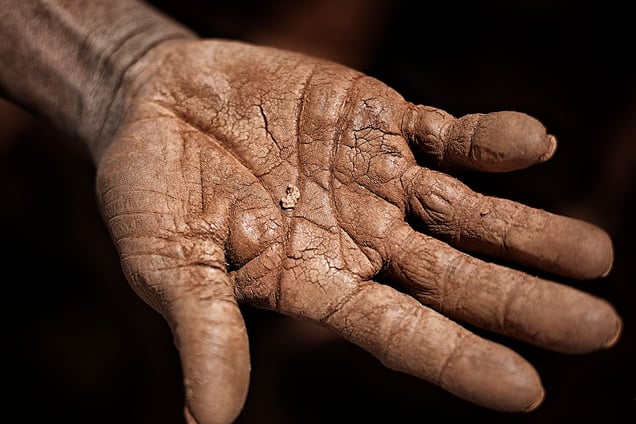
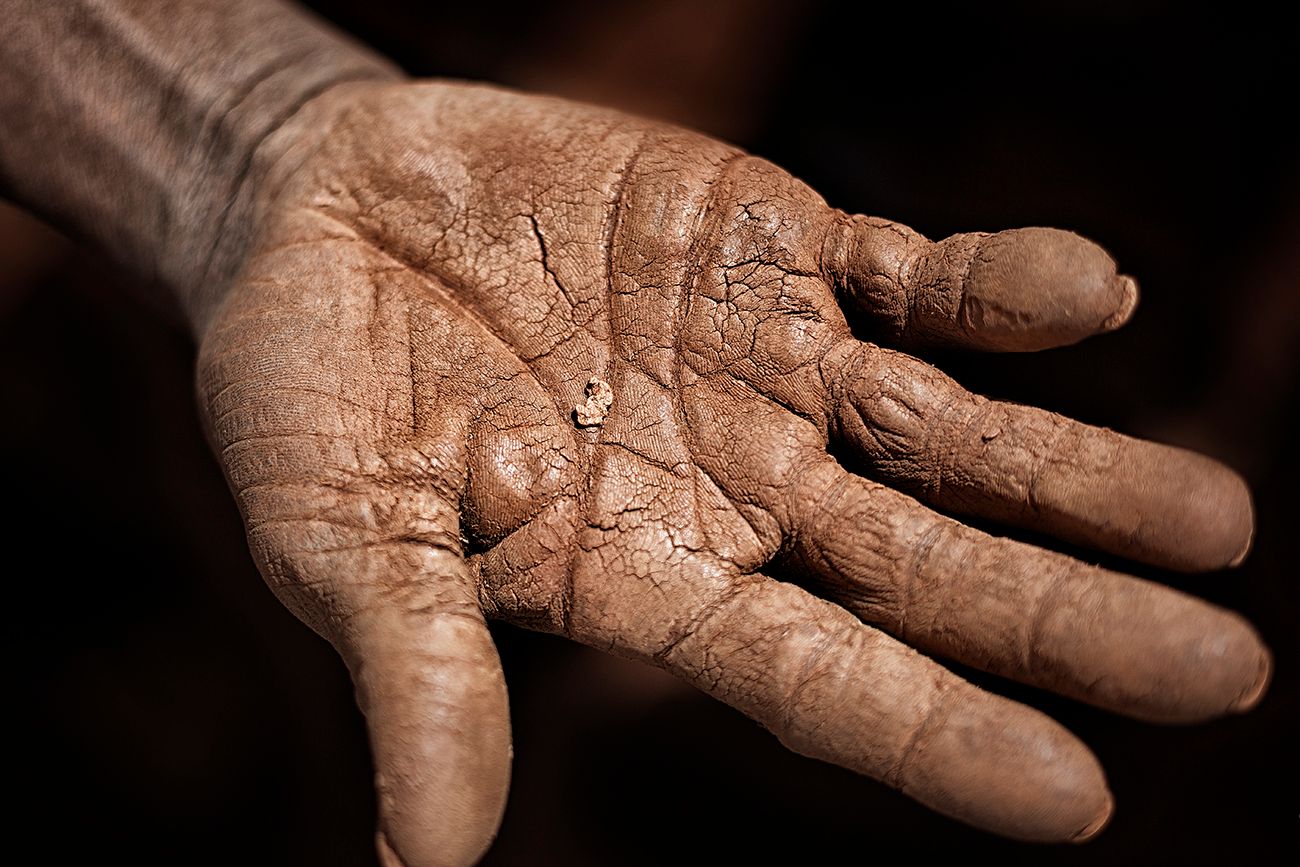
Sulayman (51) at his mine near Gangaol shows off a piece of gold that he will try to sell to a local dealer from Bani. "It is the time for holidays" he says "so, I'll buy my self a new shirt to look good for 'Fete de Ramadan'." © Matjaz Krivic
File: matjaz_krivic_digging_the_future19.jpg
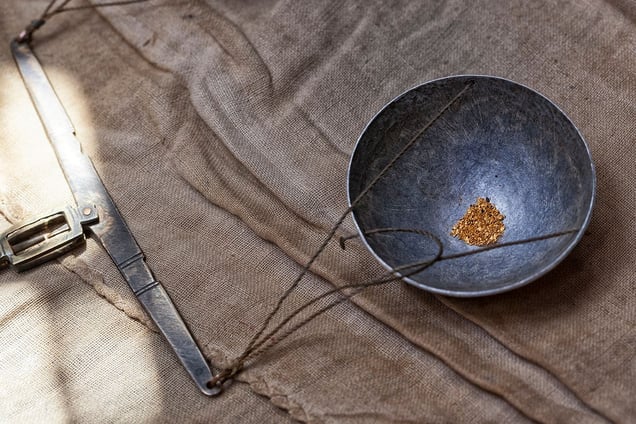
Small flakes of gold on an old scale ready to be legally sold to a government approved dealer at an official price. They will undoubtedly turn a blind eye to the children of the mines who suffer and die dreaming of their very own "El Dorado" for the sake of our smartphones. © Matjaz Krivic
File: matjaz_krivic_digging_the_future20.jpg